
Aim
To help participants improve teamwork by understanding different behavioural styles and adapting how they communicate, collaborate, and build relationships using the DISC behavioural model. Participants will gain practical insights into their own preferences and learn how to work more effectively with colleagues who think, communicate, and work differently.
An excellent pairing with this workshop is my DISC For Team Leadership workshop which looks at how managers can use knowledge of DISC to lead diverse teams more effectively.
“Thank you for your wonderful facilitation. Everyone was engaged with high energy levels and the workshop really delivered.”
WL Gore
Details
Duration: Half day or Full day
Availability: Phuket, Bangkok, Singapore, Malaysia. In fact, anywhere you want.
Participants Will Learn To:
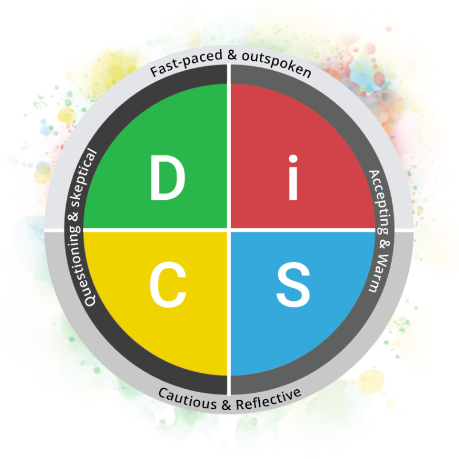
- Understand the four DISC behavioural styles and their key characteristics
- Identify their own DISC style and recognise how it influences their communication and behaviour
- Appreciate the strengths and potential challenges of each DISC style
- Recognise the behavioural preferences of colleagues through observation and interaction
- Adapt their communication style to build stronger relationships with different personality types
- Reduce misunderstandings caused by differing communication and working preferences
- Improve collaboration by valuing the diverse strengths within the team
- Build trust by recognising and respecting individual differences
- Give feedback in ways that are more likely to be well received by different DISC styles
- Respond more effectively to conflict by understanding the motivations behind different behaviours
- Improve teamwork by adapting to the needs of different individuals and situations
- Recognise how different DISC styles contribute to problem-solving, decision-making, and innovation
- Develop strategies for creating a more inclusive and collaborative team environment
- Apply DISC principles to strengthen relationships with colleagues, customers, and stakeholders
- Create a personal action plan to improve communication and collaboration using DISC insights
Workshop Overview
The DISC profile is often called a personality test and is usually grouped together with MBTI (Myers-Briggs Type Indicator). While DISC certainly has roots in personality, it is far more about professional behaviours and working styles. Instead of offering a pure personality assessment, DISC reveals insights into how individuals behave and communicate, particularly in the workplace, based on one’s default behaviour settings. For this reason, I feel it is far more relevant to business teams than MBTI. See why I prefer DISC over MBTI in the workplace.
In addition to highlighting an individual’s motivators and stressors, the DISC assessment can reveal how an individual:
- Communicates with others
- Processes information
- Approaches conflict
- Deals with change
- Reacts under stress
- Approaches meetings
- Functions in various professional settings
These behavioural elements all determine how effectively a team is able to collaborate. And collaboration, without doubt, is the main purpose of a team.
This workshop begins with a personal DISC assessment. The results of this assessment will help each team member understand themselves. But the real magic happens when we begin to understand others.
Why is Loki in accounts so focused on tiny details?
Why is Odin in sales always in such a rush?
Why does Thor in marketing never seem to take things seriously?
The truth is that there is nothing wrong with any of them. It’s just that they might do things differently to ourselves. We all have different approaches, different styles, and different pros and cons. Indeed, it is this diversity that makes teams so effective. Can you imagine how dysfunctional things would be if everyone was the same as you?
It’s a lack of understanding as to why people are like they are that can lead to annoyance, frustration, conflict, and a general lack of collaboration. If we expect everyone else to do things exactly as we do them then we will only ever be, at best, underwhelmed or, at worst, incredibly angry when they do things differently.
As an example, a fast-paced and dynamic sales executive (Sylvester) who’s always on the hunt for the next deal might feel a little frustrated when their manager (Daffy), who is a more slow-paced, detail-focused individual, appears to be making life difficult with frequent requests for detailed sales reports and forecasts. There’s no right or wrong style. They’re just different.
So, how about if they understood each other better?
In the example above, Sylvester and Daffy have two very different working styles. However, with mutual understanding of their respective working styles, they can work towards adapting their own behaviours to focus more on each other’s motivators and stay away from their stressors.
During this workshop, through the use of practical activities and discussion, we’ll identify how each DISC style can collaborate more effectively with every other DISC style.
FAQs
Is this workshop suitable for leadership teams?
Definitely. I believe DISC can be beneficial for any seniority level. Even the most senior leaders, with decades of experience, can benefit from increased understanding of their team members’ and colleagues’ working styles. It’s crucial in fact for effective collaboration.
You might also like to consider a sister workshop, DISC For Team Leadership, that goes a step further than the standard collaborative aspects of DISC and specifically looks at how leaders can adapt their leadership style for different situations.
How long is the workshop?
I’d recommend around three hours minimum to adequately cover the learning. A four hour session would be even better and allow for more depth of understanding. If we combine DISC with other related training elements such as communication, a full-day session would be worthwhile.
Is the assessment included?
I have several options here. Within my normal facilitation fee, a free assessment is included in the price and it performs admirably. However, if you would prefer an official assessment with personalised reports for each participant, extra assessment fees would apply – but I have both medium and high-budget options available. Depending on your budget, I will present the best solution.
How many participants can you accept in this workshop?
Any number really. I’ve run this workshop for teams as small as 7 to as large as 60. The assessment style will change depending on the group size and my facilitation approach will also be adapted depending on group size. I have the flexibility to adapt to each situation.
Get in touch and discuss with me directly.